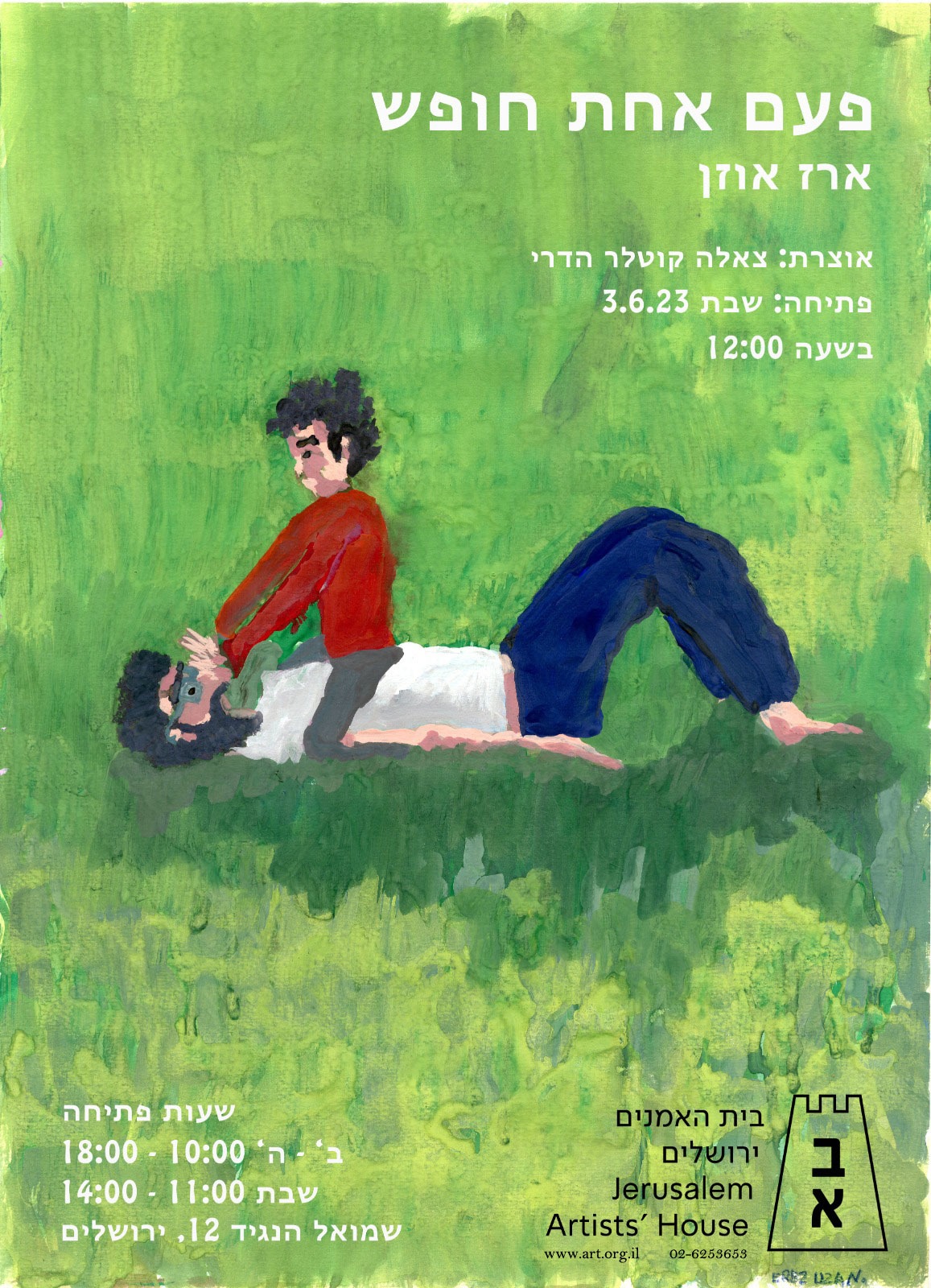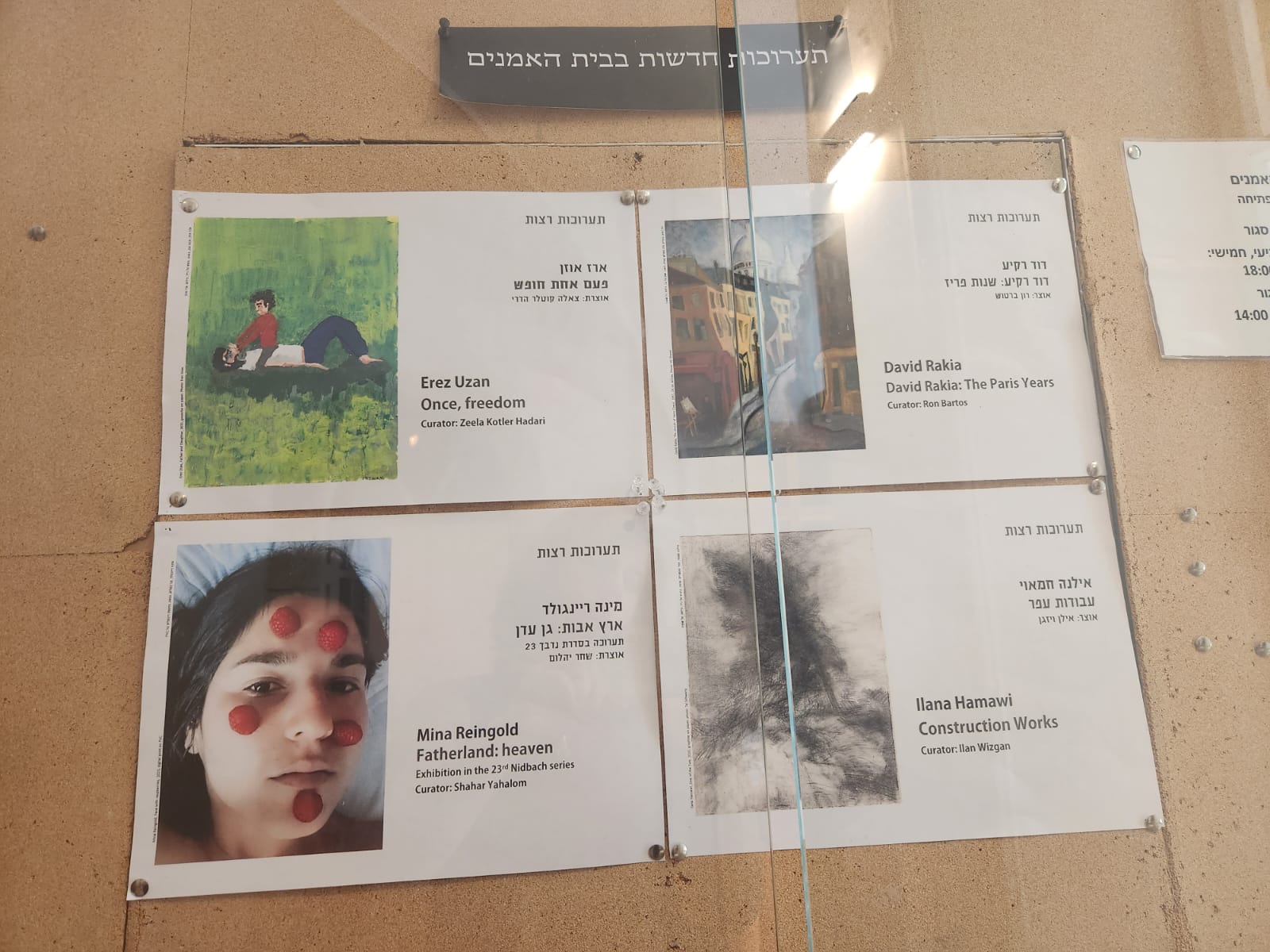
ארז אוזן: פעם אחת חופש
בית האמנים, ירושלים
3 ביוני 2023 עד 12 באוגוסט, 2023
אוצרת: צאלה קוטלר הדרי
זריעה, שתילה, נטיעה, השרשה – הכול קורה בגינה, והכול משתנה בה, בהתרחשות שולית לכאורה, בין ערימה של עלי שלכת לבין ישיבה על מחצלת.
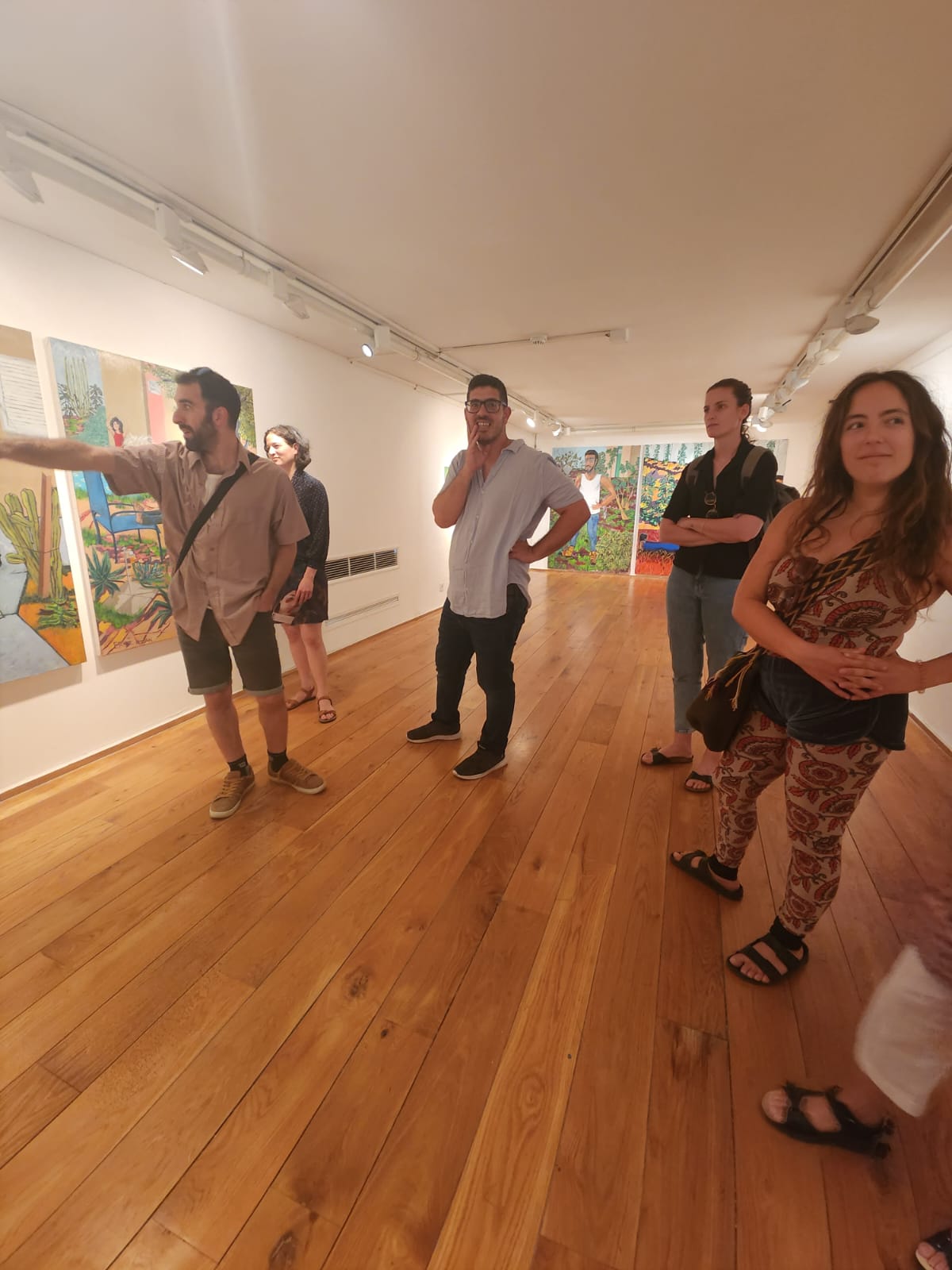
גוף העבודות של ארז אוּזן מציע לצופה הצצה אינטימית אל אירועי יומיום. הצמחים משמשים בו כמטאפורה כפולה: הם מייצגים חופש ובד בבד גם את כבלי הבית, המשפחה – זו שממנה בא האמן, וזו שהקים בישראל. ובין לבין – החיפוש אחר איזון, אחר נקודת שיווי משקל.
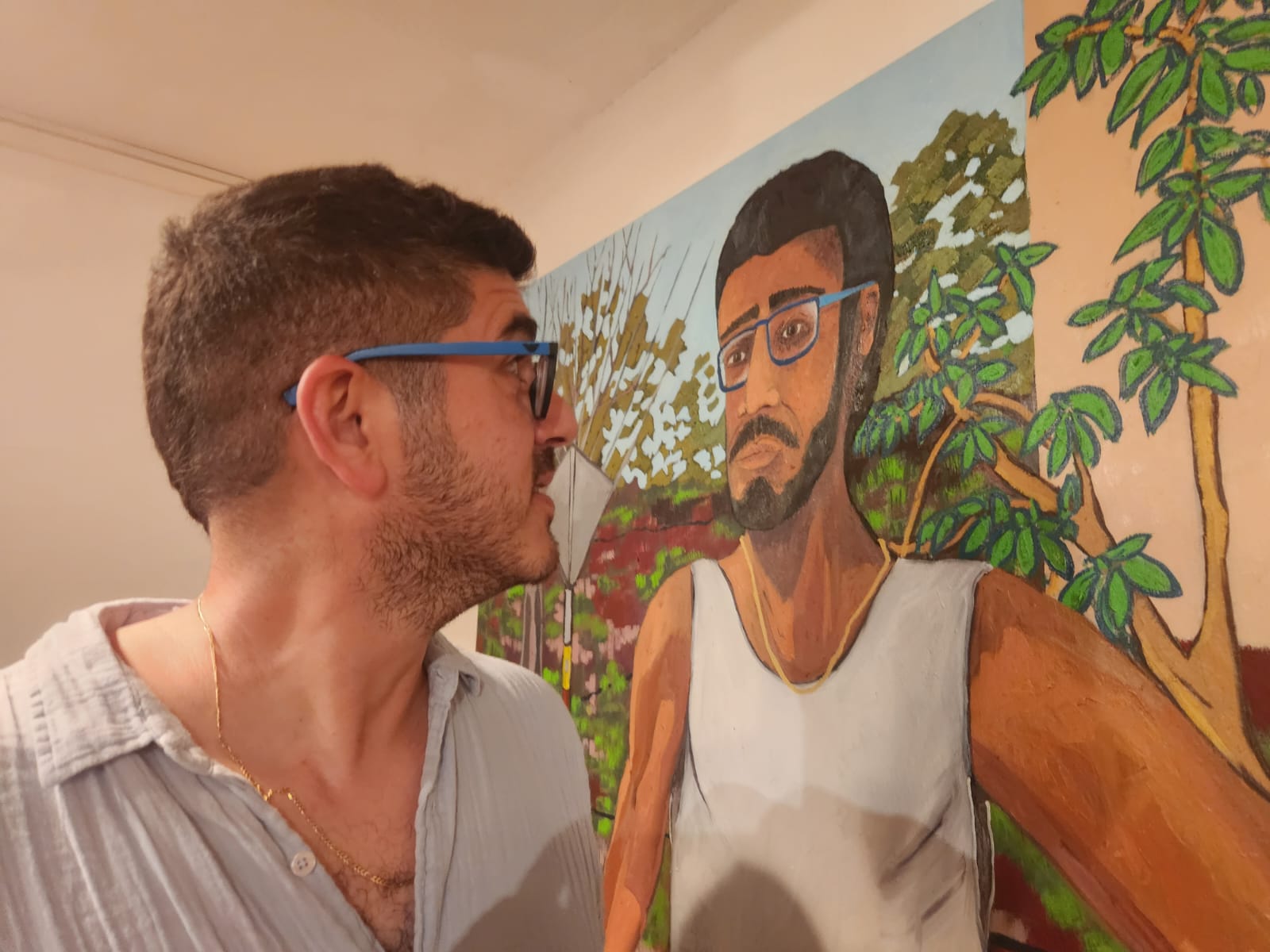
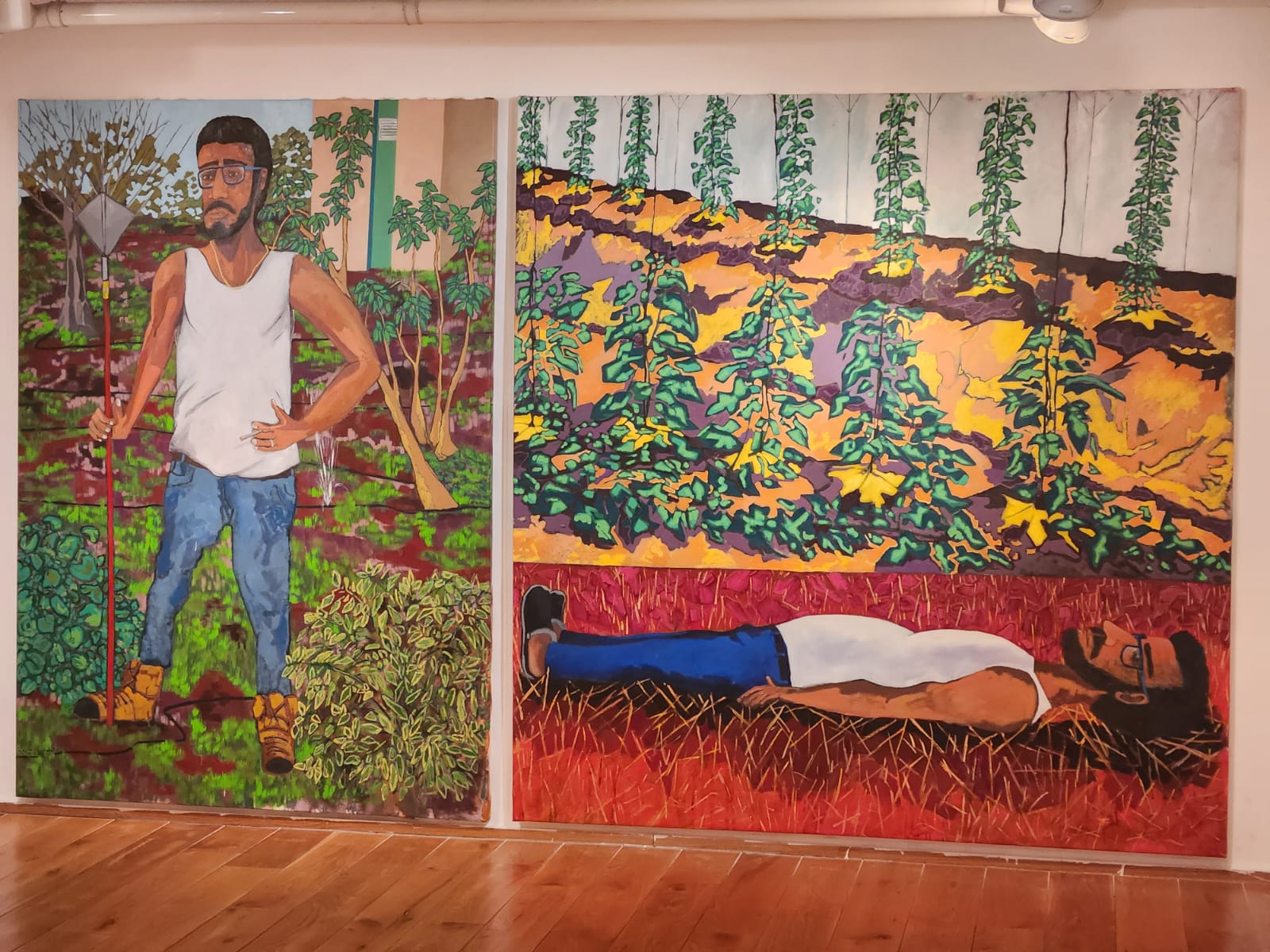
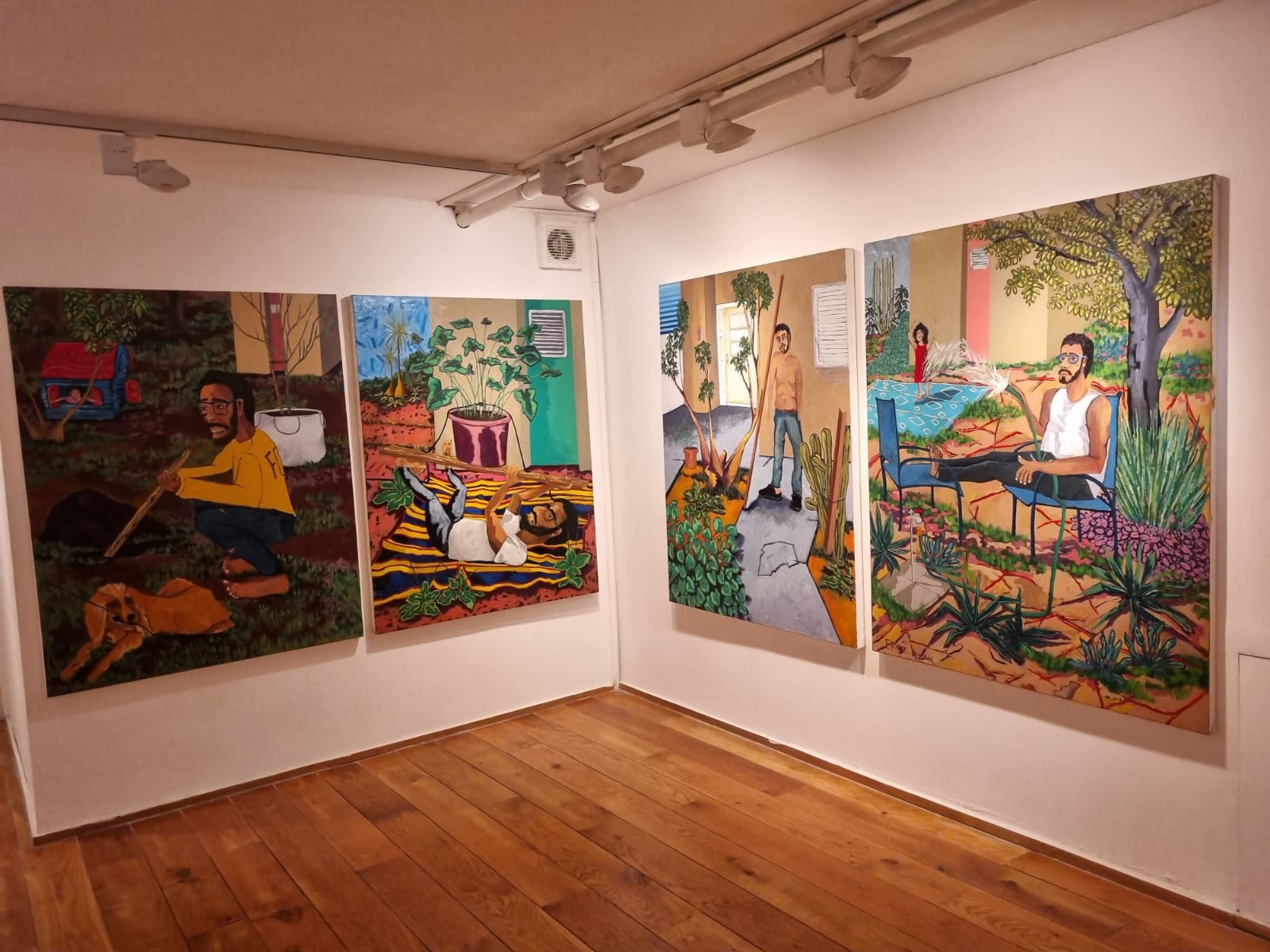
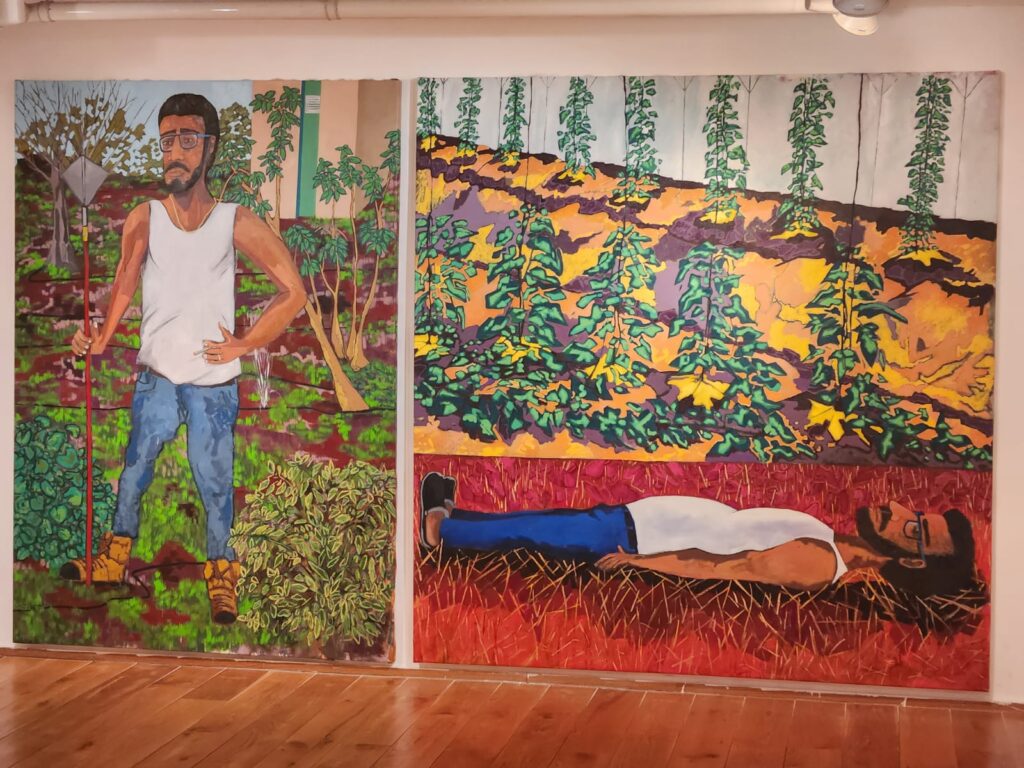
דמות הגיבור בסדרת העבודות המוצגת היא דמותו של האמן, שאותו יצר על פי מאפיינים ביוגרפיים וחזותיים: אב צעיר בן 35, בן מושב במרכז הארץ, שנדד עם משפחתו לקיבוץ בעמק ומקיים חיי משפחה במציאות הישראלית התובענית, מרובת המשימות והמטלות מסביב לשעון, כשהרצון העיקש לדבוק ביצירה מספק לו עוגן.
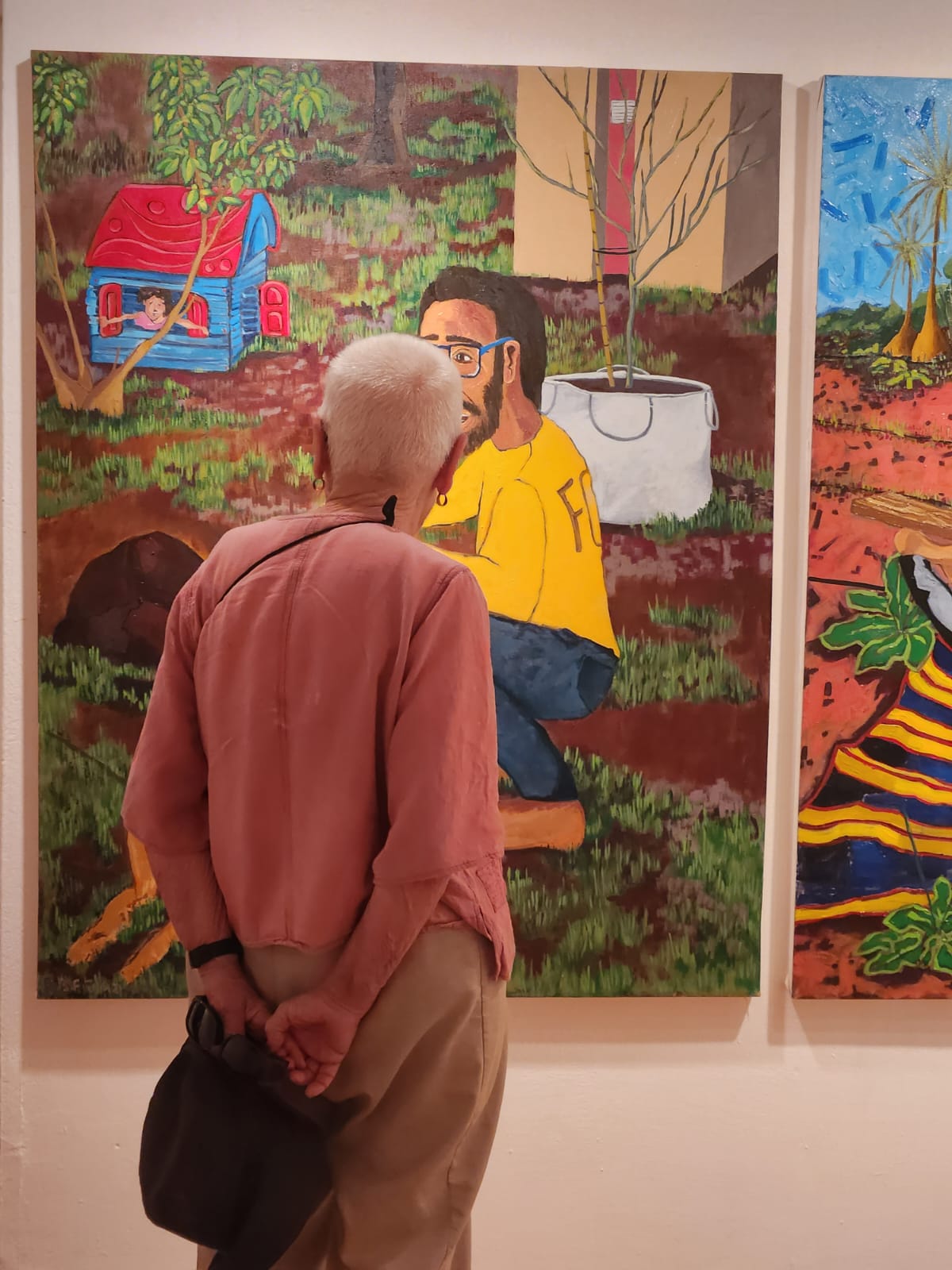
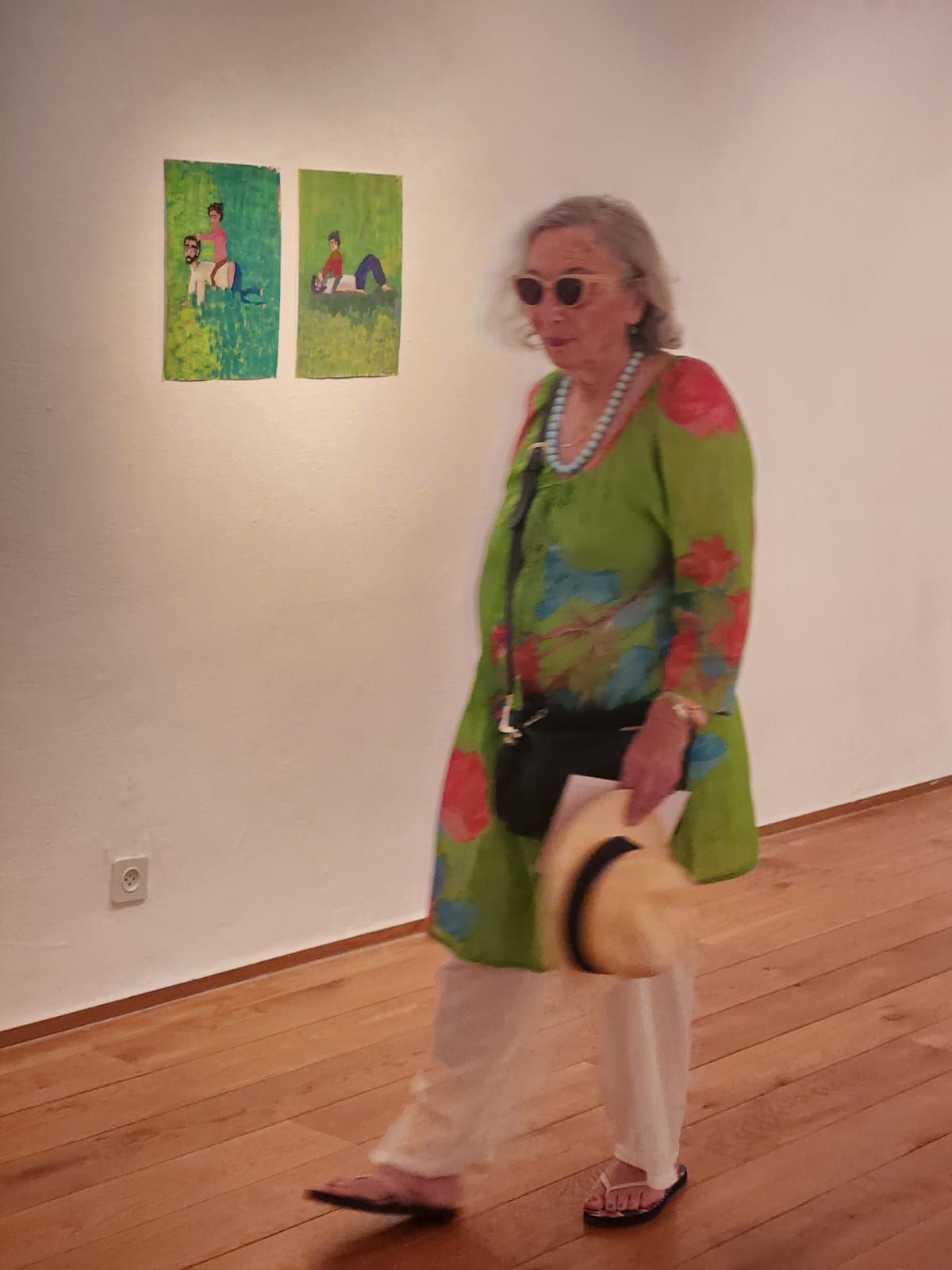
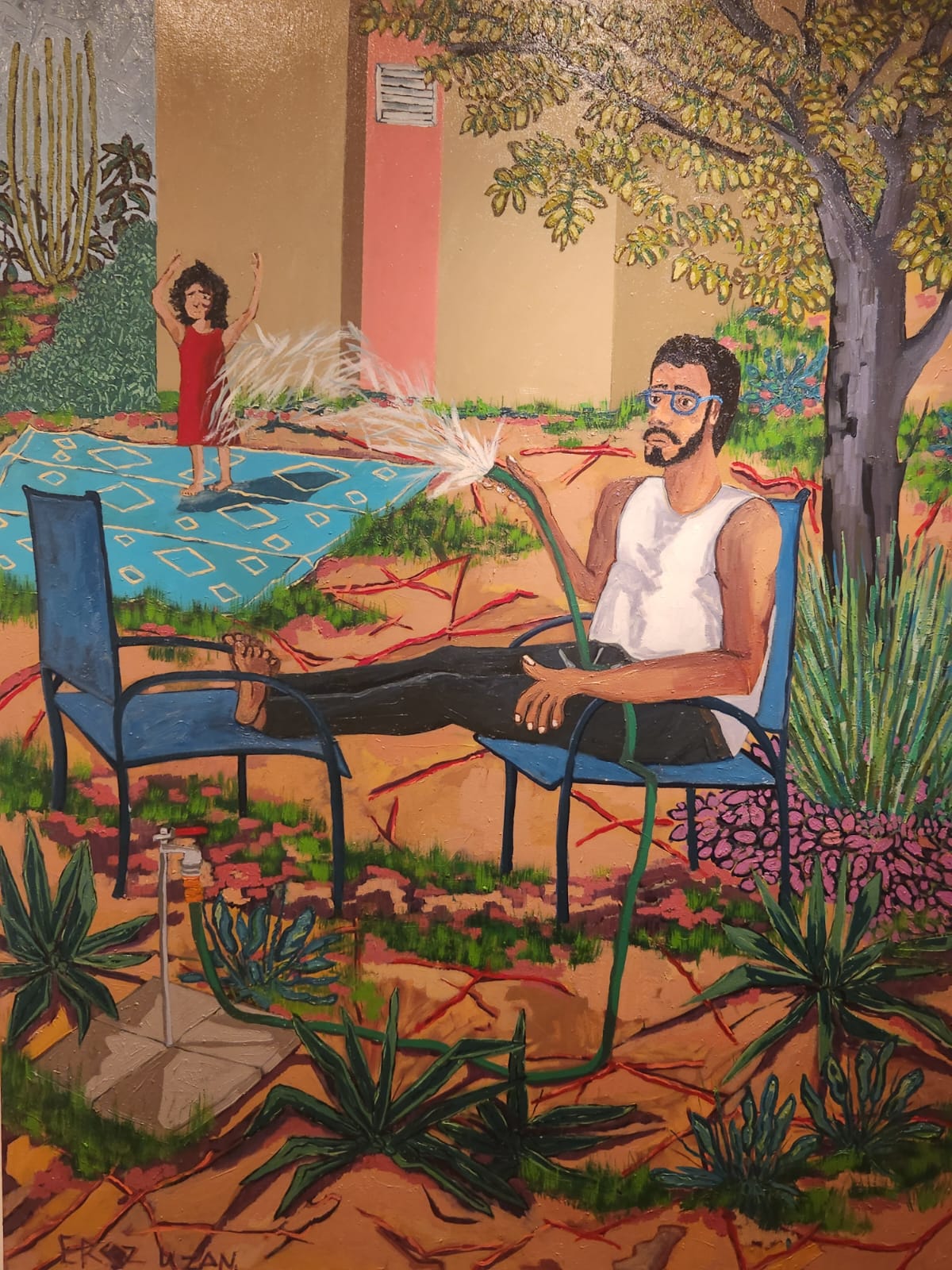
החיפוש אחר נקודת אמצע בין החופש לבין מרוץ החיים מיוצג כמשחק, כשעשוע, בראי ילדותו השנייה: בית פלסטיק כדימוי לילדות כל-ישראלית; צינור מים, להעביר אִתו שעות חמות של חודש אוגוסט, תוך קריצה לדמותו המיתולוגית (הנכחדת) של הגבר מן הסרט מציצים; גלגולים על כר דשא ומשחקי מחבואים. לעתים המחבוא טוב כל כך – כשהוא מתחת לאדמה – עד כי איש לא ימצא את האמן בגינתו. עכשיו הוא נח.
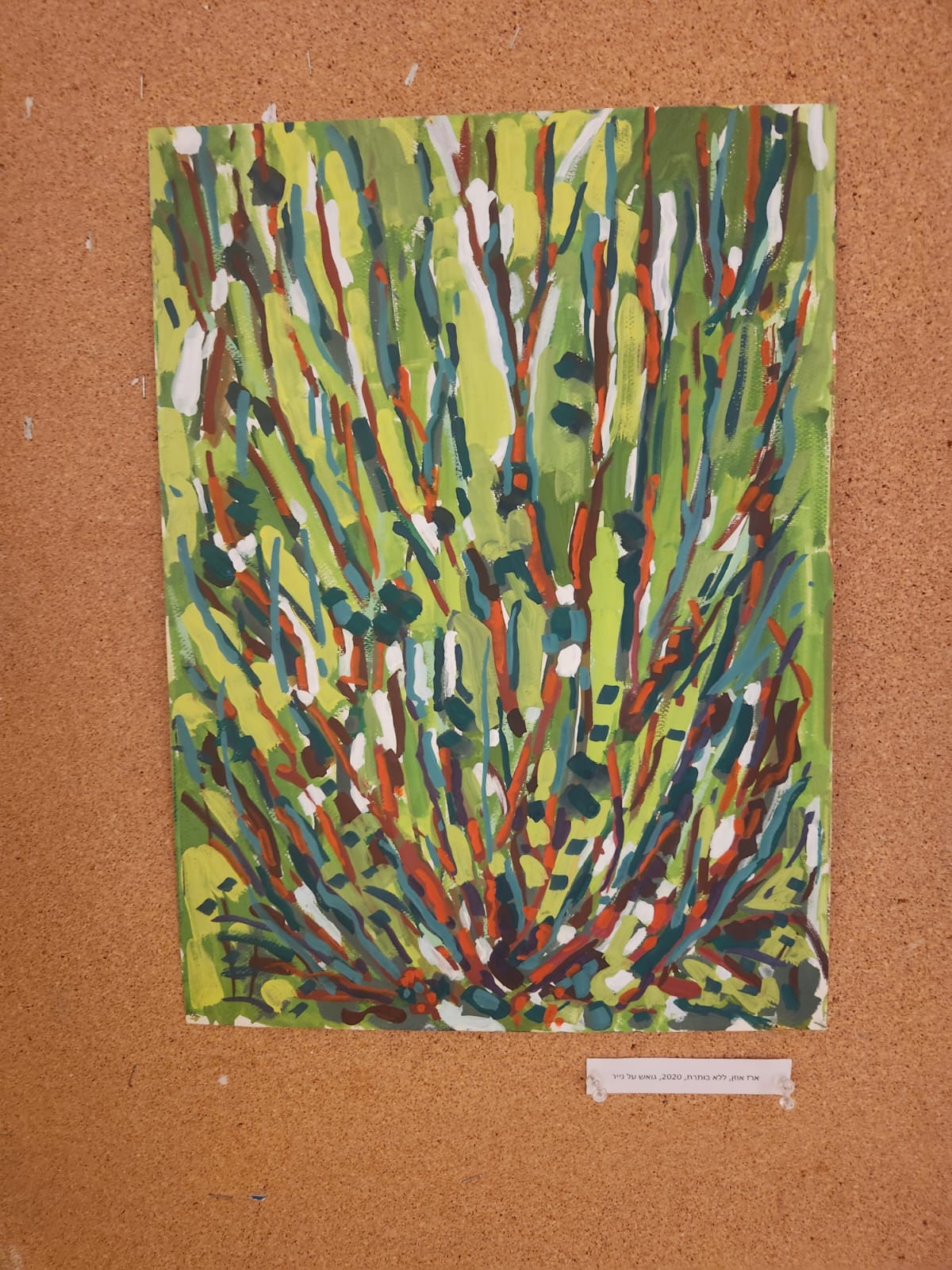
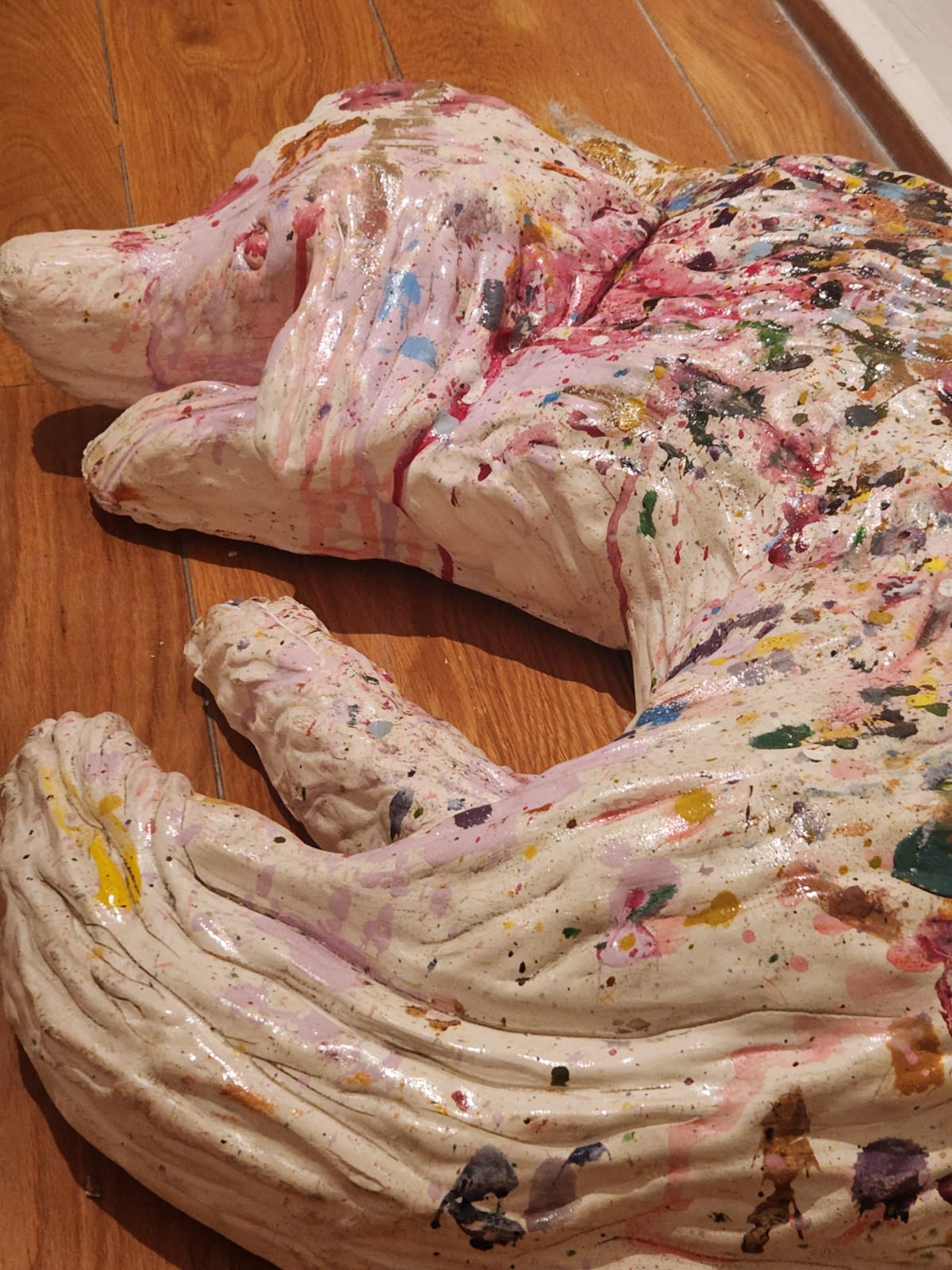
בסדרת עבודות תקריב אל הצומח מציע לנו האמן לעשות זוּם-אִין. לאחר שמיקמנו את ההתרחשות, אנו ניגשים פנימה, אל המופשט, אל סימנים, מרקמים וצבעים, אל שפה שאינה זקוקה למילים. שם גם מסתתרת הסיבה לכול – הדחף לגדל ולגדול; הפלא שבלחיות ולהחיות, לשתול ולקצור, לשתות ולהשקות; להיות ילד, להיות אבא, להיות צייר.
Once, freedom
Erez Uzan
Jerusalem artists house
Curator: Zeela Kotler Hadari
3 Jun — 12 August, 2023
Seeding, sowing, planting, rooting—everything happens in the garden, and everything changes in it, in an ostensibly marginal occurrence, between a heap of fallen leaves and sitting leisurely on a mat.
Erez Uzan’s body of work offers the viewer an intimate glimpse into everyday life. The plants form a double metaphor: they represent freedom and at the same time, the bonds of home and family—the one from which the artist hailed, and the one he made for himself in Israel. In between—the search for equilibrium and balance.
The figure of the protagonist in the featured series is that of the artist, which he created according to biographical and visual characteristics: a young father, 35-years old, born in an agricultural community (moshav) in central Israel, who moves with his family to a kibbutz in the Jezreel Valley, trying to maintain family life in a demanding reality and juggle the never-ending set of tasks and chores, with the persistent desire to cling to artistic creation serving as an anchor.
The search for a middle ground between freedom and the rat race is represented as a game, a pastime, through the prism of his second childhood: a plastic house as an image of an all-Israeli childhood; a hose, with which to spend the hot hours of August, while playfully alluding to the mythological, now extinct male figure in the Israeli cult movie Metzitzim (Peeping Toms); rolling on the lawn and playing hide and seek. Sometimes the hiding place is so good—when it is underground—that no one can find the artist in his garden. He is resting now.
In a series of close-up works centered on plants, the artist suggests we zoom in. Having located the occurrence, we plunge in, into the abstract, into the signs, textures, and colors, into a language that needs no words. This is also where the reason for everything lies—the motivation to raise and grow; the wonder of living and sustaining, planting and harvesting, drinking and watering; being a child, a father, a painter.